May 31 2026
By Zhanna Kapranova
"Orange is the new black," but what if orange was always orange?
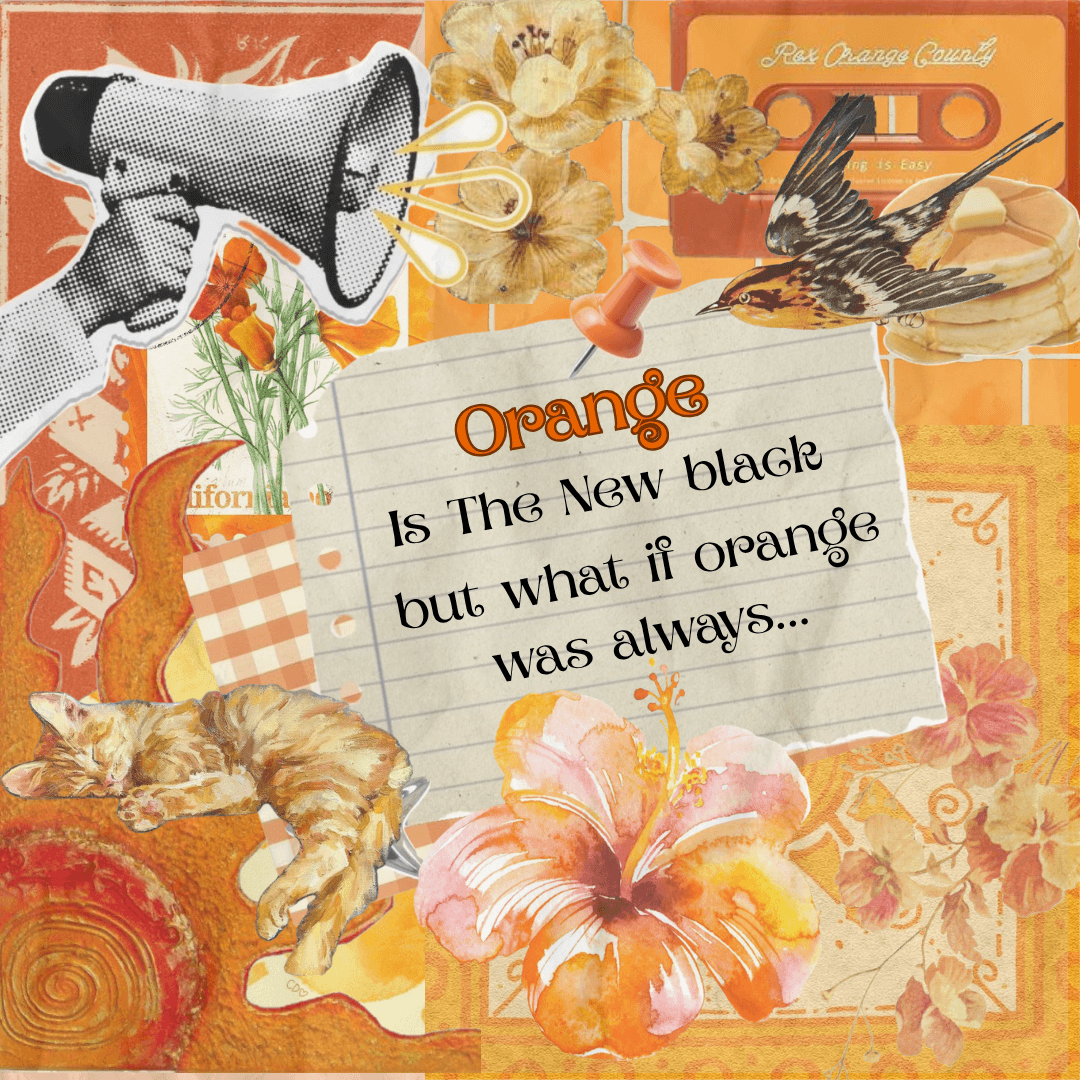
Every few years, the internet rediscovers orange.
Fashion blogs begin praising it as the color of the season, trend forecasts start predicting the rise of warm palettes again, and brands quietly reintroduce burnt orange into campaigns that somehow feel both nostalgic and futuristic.
But as strange as it sounds, orange never really left. Funny enough, people continue to treat it as a surprise trend rather than a lasting cultural presence.
In 2015, Vogue published its celebratory post on the new Pantone shades with “12 of Fall's Best Orange-Hued Looks,” describing the color as something that would be “heating things up on the streets.” Years later, fashion publications and trend forecasters continue repeating the same narrative: orange is back. By 2025, orange was once again everywhere across London Fashion Week street style.
Yet the language surrounding orange still feels strangely restricted:
“Orange is back.”
“Orange is the new black.”
“Orange is trending.”
But if culture keeps rediscovering orange every few years, maybe it was never really gone to begin with.
What if orange finds its way back into our lives precisely when we need it most?
Unlike black, which often signals sophistication, or red, which demands urgency, orange occupies a more complicated space. It is energetic without being aggressive, warm without being passive, and bold without entirely abandoning comfort.
Perhaps this is why orange has always divided opinion. Some people find it overwhelming; others find it uplifting. Its appeal seems to depend as much on the emotional state of the viewer as the color itself.
Orange's recurring popularity often appears against the backdrop of uncertain periods, which raises an interesting question: are we subconsciously drawn to colors that offer warmth when the world feels colder?
Maybe orange is less of a trend and more of a season. Like summer, it isn't always present. It fades, recedes, and makes room for other moods. Yet it inevitably returns, bringing with it a familiar sense of warmth, energy, and optimism.
What's particularly interesting is that many of these returns seem to occur during periods that feel uncertain or emotionally heavy. In 2015, when Vogue was celebrating a new wave of orange hues, the world was simultaneously occupied by political tensions, security concerns, and public anxiety. More than a decade later, orange once again emerged across runways and trend forecasts against the backdrop of a world grappling with conflict and instability.
This does not mean that fashion responds directly to every global event. But culture rarely exists in isolation. As the world shifts, so do the symbols, colors, and aesthetics people gravitate towards.
Perhaps orange persists because it offers something timeless, like warmth in colder moments and visibility in muted landscapes. A color that once seemed overwhelming begins to feel comforting.
Maybe orange was never the new black.
Maybe orange was simply just orange.
Sources & Further Reading
Vogue — 12 of Fall's Best Orange-Hued Looks (2015)
Johnson Tiles — Orange Is the New Black: Pantone's AW20 Colour Trend (2020)
Fashionista — LFW Spring 2026 Street Style Trend: Orange (2025)
Elle Decor — Orange Color Trend 2026 (2026)
Byrdie — Orange Has Taken Over Luxury (2025)